
"Almost Daily Health Tips From Our Osteopath Team"
Use the Form Below to Get Them All Sent to You for FREE
How Kangaroo Point Locals Are Beating Desk-Related Back Pain
Kangaroo Point is full of desk workers — professionals in the CBD towers, remote workers in home offices, creatives hunched over laptops in riverside cafes. And they're increasingly showing up at our clinic with the same complaint: lower back pain that builds through the workday. Here's how the ones beating it are doing it.
Why the Desk Wins (If You Let It)
Eight-plus hours of sitting shortens hip flexors, switches off glutes, rounds the upper back and loads discs and joints in one static position. No single hour is the problem — it's the uninterrupted accumulation, repeated daily, that erodes your back's tolerance until one innocent sneeze "throws it out".
What's Working for Local Desk Workers
- Micro-movement beats perfect posture: changing position every 20–30 minutes matters more than any single "correct" posture.
- Commute as therapy: the Kangaroo Point stairs, the river walk, cycle paths — locals who build incidental movement into their day report far fewer flares.
- Serious desk setups: screen at eye level, chair supporting not slumping, standing intervals — especially for the work-from-home crowd who've spent years on the kitchen table.
- Treating the cause, not the flare: the workers who stay pain-free get assessed before things break, addressing restrictions and weakness early.
Where Osteopathy Fits
For most desk-related back pain, the fix is twofold: hands-on treatment to restore movement where sitting has stolen it, and a specific strength plan to rebuild what sitting has switched off. Patients who combine both — plus small daily habit changes — typically go from monthly flare-ups to years between them.
Simple Changes That Make the Biggest Difference
You don't need to overhaul your whole workspace to feel a meaningful change in your back. For most Kangaroo Point office workers, a handful of targeted adjustments do the heavy lifting.
Start with monitor height: the top of your screen should sit at eye level, which often means a stand or a stack of books is needed for a laptop. Set your chair height so your feet rest flat and your elbows sit roughly at desk height, and if your feet dangle, use a footrest. A 20-minute walking break along the Kangaroo Point cliffs at lunch isn't just good for your back — it's a reset for focus and mood that pays you back for the rest of the afternoon.
If you've made these changes and your back still aches by mid-afternoon, that's the point at which hands-on treatment helps. Osteopathy addresses the stiff spinal segments and overworked muscles that ergonomic tweaks alone can't release, so the two approaches work best together rather than as alternatives.
Frequently Asked QuestionsIs a standing desk the answer?
It's a useful tool, not a cure. Static standing creates its own problems — alternating positions through the day is the real win.
I only get pain at work. Does that mean my desk is the cause?
Usually the desk is the amplifier, not the sole cause. Underlying restriction or weakness plus sustained sitting is the typical combination — which is why assessment beats guesswork.
The Kangaroo Point Desk Worker's Day
The typical local workday is a spine stress test: a commute wedged in traffic or on a bus, eight or more hours at a laptop that was designed for portability rather than posture, an evening slumped over a phone, and then a gym session or weekend game that asks the body for athletic output it has not rehearsed since the last one. None of these moments is dramatic. Stacked together, week after week, they are exactly how desk-related back pain builds — the back quietly loses the capacity to tolerate load, and one ordinary Friday afternoon it stops being quiet.
The pattern shows up in the clinic constantly: aching across the base of the spine by mid-afternoon, stiffness standing up after meetings, and a niggle that flares every time the weekend gets active.
Small Changes, Big Relief
- Move every 30–45 minutes — walking to the kitchen counts; the goal is breaking stillness, not exercise.
- Raise the laptop. A $30 stand and external keyboard fix more necks than any cushion.
- Two strength sessions a week — glutes, mid-back, core. Capacity beats posture theory.
- Warm up properly before weekend sport; the Monday-morning back usually was injured on Saturday.
- If pain keeps recurring despite all of this, get the mechanics assessed — treatment plus a specific plan beats another month of guessing.
Frequently Asked Questions
Your Next Step
Join the locals who've stopped putting up with desk-related back pain. Book an assessment at Osteoworks, Kangaroo Point.
Book an appointment online or contact our Kangaroo Point clinic.
You may also find these helpful: our Back Pain treatment page, 5 Desk Stretches to Do Every Hour If You Sit for Work, Lower Back Pain When Sitting All Day: Causes and Fixes, Osteopath Kangaroo Point: What to Expect at Your First Appointment.
About Osteoworks
Osteoworks is an osteopathic clinic in Kangaroo Point, Brisbane. Our osteopaths take a hands-on, whole-body approach — we look for the underlying cause of your pain rather than simply treating the symptom. Meet the team or learn more about osteopathy.
Osteopathy Treatments in Brisbane
Select your area of pain to get clear answers and the right treatment.
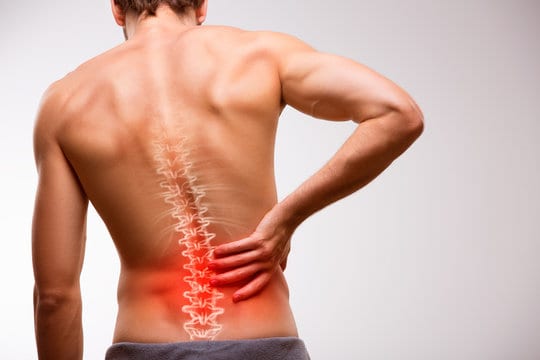
Back Pain Treatment
Lower back pain, sciatica, stiffness
[View Treatment]
Knee Pain Treatment
Injury, strain, instability
[View Treatment]

Neck & Shoulder Treatment
Stiffness, headaches, posture pain
[View Treatment]

Hip Pain Treatment
Walking pain, stiffness, groin pain
[View Treatment]

Comprehensive, Hands-On Care for Lasting Results
Osteopathy is a holistic approach to healthcare that focuses on diagnosing, treating, and preventing musculoskeletal problems. Unlike treatments that simply address symptoms, osteopaths work to identify and treat the root cause of your pain, helping you achieve long-term relief and better overall health. Whether you're dealing with chronic discomfort or a recent injury, an experienced Brisbane osteopath can provide personalised care tailored to your specific needs.
Osteopaths use a variety of hands-on techniques to improve mobility, reduce tension, and restore balance to your body. These include gentle stretching, massage, joint mobilisation, and manipulation. Each treatment is carefully designed based on a thorough assessment of your posture, movement patterns, and medical history. This comprehensive approach means that osteopathy can effectively address a wide range of conditions, from acute injuries to ongoing pain management.
Back pain is one of the most common reasons people seek osteopathic care. Whether it's lower back pain from sitting at a desk all day, a sports-related injury, or chronic stiffness, osteopaths have the skills to help. By releasing tight muscles, improving joint mobility, and addressing postural imbalances, treatment can significantly reduce pain and help you return to your normal activities. Many patients find that regular osteopathic sessions prevent back problems from returning.
Neck pain is another frequent complaint, often caused by poor posture, stress, or prolonged computer use. Osteopaths gently work on the neck, shoulders, and upper back to relieve tension, improve range of motion, and reduce headaches that often accompany neck problems. Treatment may also include advice on ergonomics and exercises to strengthen supporting muscles.
Hip pain can be particularly debilitating, affecting your ability to walk, sleep, and enjoy daily activities. Osteopaths assess not just the hip joint itself, but also the lower back, pelvis, and legs, as hip problems often stem from or contribute to issues in surrounding areas. By addressing the whole kinetic chain, osteopathic treatment can provide lasting relief and improve your overall mobility.
One of the key benefits of osteopathy is its focus on prevention. Rather than waiting for pain to return, your osteopath will work with you to identify factors that may be contributing to your problems. This might include postural habits, workplace ergonomics, exercise techniques, or lifestyle factors. You'll receive practical advice and exercises to help you maintain improvements between sessions and reduce the risk of future injury.
If you're in the Brisbane area, seeing a local practitioner offers significant advantages. A Brisbane osteopath understands the lifestyle factors common to the area—from active outdoor pursuits to commuter stress—and can provide relevant, practical advice. For residents in and around Kangaroo Point, convenient access to quality osteopathic care means you can easily fit treatment into your schedule, whether you need a single session for an acute issue or ongoing care for chronic conditions.
Our clinic provides a welcoming, professional environment where your health is our priority. We take the time to listen to your concerns, explain our findings, and involve you in your treatment plan. Many patients are surprised by how quickly they notice improvements and how much better they feel with regular care.
Don't let pain limit your life. Whether you're experiencing back pain, neck pain, hip pain, or any other musculoskeletal issue, osteopathy offers a safe, effective, drug-free approach to relief. With the right treatment and guidance, you can move better, feel stronger, and enjoy life more fully. Contact us today to book an appointment and discover how osteopathy can help you achieve lasting results.
Speak directly with an osteopath to ask questions
and understand your options before booking.
Call the team (07) 3217 3131
Recent Posts
 Best Sleeping Positions for Back and Neck Pain
 Warm-Up Routine to Prevent Lower Back Injury Before Exercise
 How to Set Up an Ergonomic Home Office (Osteopath-Approved)
Categories
ArthritisBack Pain
Chest Pain
Elbow Pain
Exercise
Flexibility
Foot pain
Hands
Headaches
Health Tips
Hip Pain
Knee Pain
Mindfulness
Neck & Shoulder Pain
Osteopathy
Osteoworks
Pain Management
Physical Therapy
Posture
Rest
Sleep
Sports Injuries
Stretches
Wellness